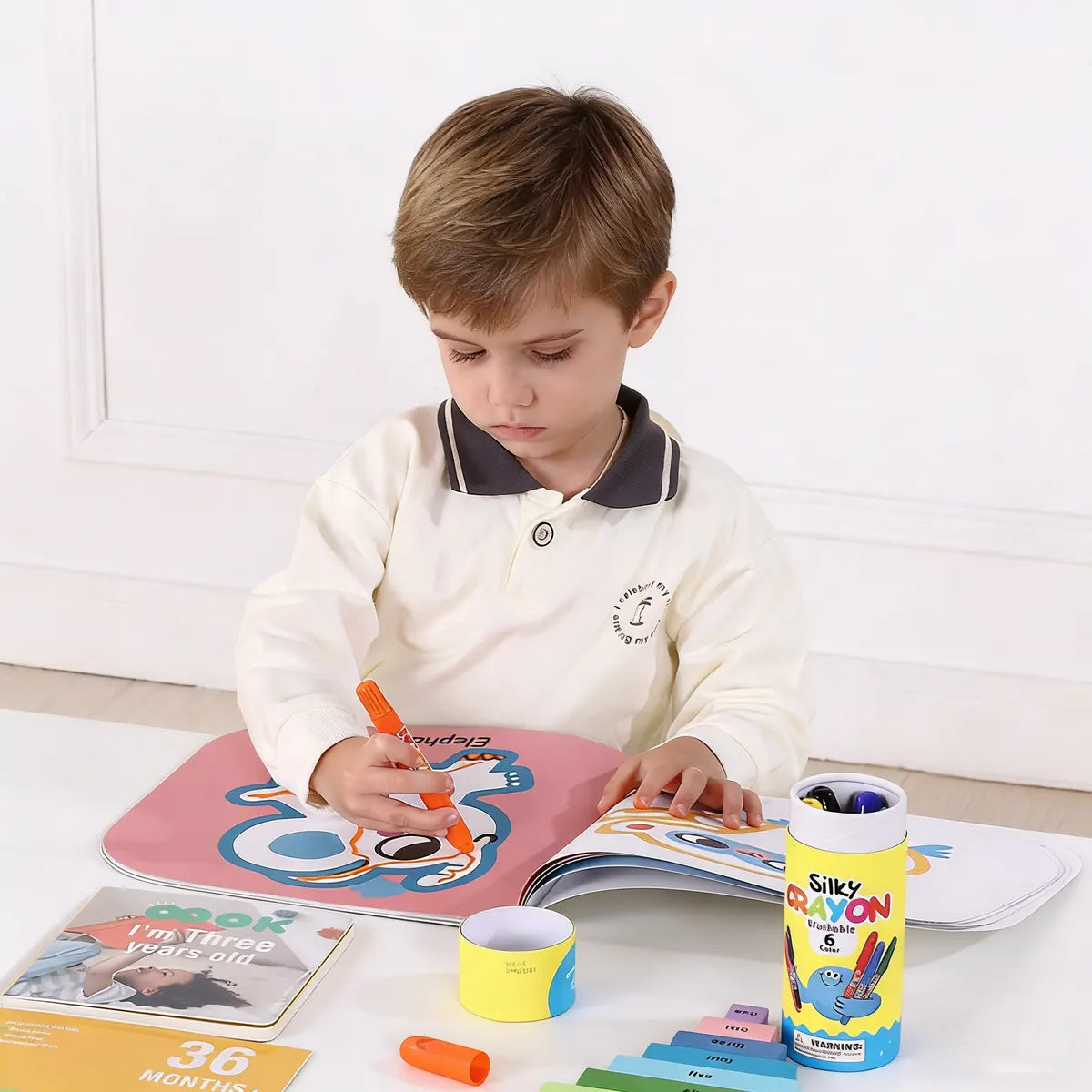
A child changes faster in the first three years than at any other time. The right toy at the right month is one they can almost, but not quite, already do. Here is what to look for at each stage.
0 to 2 months
Newborns see contrast before color. Black and white cards and simple shapes held close to the face are enough. See the Montessori Play Box, 0 to 2 months.
3 to 4 months
Babies start following objects with their eyes, then swiping at them. Look for light objects that move slowly and hang within reach. See the Play Box, 3 to 4 months.
5 to 6 months
Reaching becomes holding. Small wooden rattles and rings sized for one hand work best. See the Play Box, 5 to 6 months.
7 to 8 months
Sitting up frees both hands. Objects to pass from hand to hand, turn over and drop. See the Play Box, 7 to 8 months.
9 to 12 months
The pincer grip arrives, and with it the joy of putting things in and taking them out. Containers, posting boxes and small pieces for finger and thumb. See the Play Box, 11 to 12 months and The Grasp Box.
13 to 18 months
Walking changes play. Pull along toys, stackers and simple shape sorters. See the Play Box, 13 to 15 months, the Play Box, 16 to 18 months and the Pull Along Giraffe.
19 to 24 months
Toddlers want harder problems. Puzzles with a few pieces, nesting boxes and first pretend play. See The Walker Box.
2 to 3 years
Matching, sorting and real role play: kitchens, shops, tools. See the Play Box, 25 to 30 months, the Play Box, 31 to 36 months and The Builder Box.
What makes a toy Montessori
- One clear purpose per toy
- Natural materials, usually wood
- Sized for a child's hands
- Fewer toys, rotated often
Not sure which stage your child is in? Start with their age in months. Every Kidwood box is matched to it. Shop all Montessori Play Boxes.